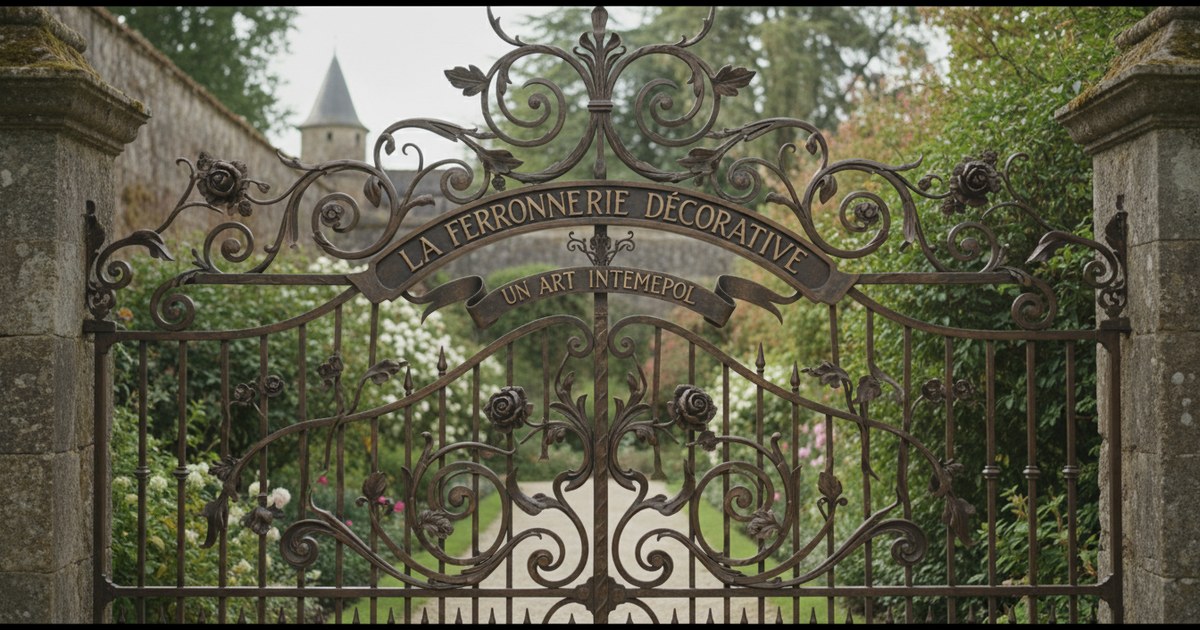
Decorative ironwork is a craft that has crossed the centuries without losing its appeal. From the medieval period to the present day, wrought iron continues to fascinate because it can be both strong and elegant. This skilled trade turns a raw material into ornamental pieces that lift the spaces we live in.
The origins of an age-old skill
The craft of the artistic blacksmith reaches far back in time. As early as antiquity, smiths already knew how to work iron into objects that were both useful and decorative. In the Middle Ages, ironwork had a golden age: monumental gates, ornate door knockers, and elaborate light fittings adorned castles and cathedrals.
The Renaissance and the baroque style then pushed the art toward greater complexity, with scrolls, foliage, and floral motifs of remarkable delicacy. Each era left its own mark on the evolution of decorative ironwork.
The blacksmith’s traditional techniques
Decorative ironwork rests on several core techniques that craftspeople still practice with care. Hot forging remains the preferred method: metal heated red-hot in the forge becomes malleable and can be hammered, drawn out, and bent as the smith intends.
Joining the pieces also relies on proven methods. Welding, riveting, and forged collars bring the parts together while keeping them strong and pleasing to the eye. The finish, whether waxed, varnished, or patinated, is the last step that brings out the beauty of the work.
“Wrought iron is not simply a material. It is a living substance that yields to the smith’s hands and becomes metallic poetry.”
Decorative uses of wrought iron
Decorative ironwork appears in many parts of our homes and gardens. Wrought-iron stair railings give interiors character and elegance, while ornate gates serve as a true calling card for a property.
Balcony railings, window grilles, chandeliers, and wall lights are all chances to bring this craft into everyday life. In the garden, pergolas, arches, and supports for climbing plants combine use and beauty, forming structures that age with grace.
How to choose and care for wrought-iron pieces
- Choose authentic work: look for pieces made by real craftspeople rather than industrial copies. The quality shows in the details and the fineness of the execution.
- Match the style: pick motifs that fit the architecture of your home. A classic style suits older buildings, while clean lines sit better in a contemporary setting.
- Maintain it regularly: frequent dusting and a coat of protective wax once or twice a year will keep indoor ironwork looking its best.
- Guard against rust: on outdoor pieces, check the anti-corrosion coating and touch it up when needed with a paint made for iron.
- Respect the patina: on older pieces, the patina of time is part of the charm. Avoid harsh cleaning that would wipe that history away.
Ironwork today
Decorative ironwork keeps centuries-old techniques, and it also knows how to reinvent itself. Contemporary artist-blacksmiths explore new shapes and play with contrast between iron and other materials such as glass, wood, or stone. Some create monumental sculptures. Others design furniture where function meets artistic expression.
That evolution keeps ironwork a living, active craft, able to appeal both to people who love tradition and to people drawn to modern design. Each piece stays unique, carrying the mark of the maker’s hand and a skill we have a duty to pass on.
Bringing decorative ironwork into your surroundings is a choice for durability, authenticity, and lasting beauty. It also supports a craft of high standard that carries very old traditions while belonging firmly to our own time.